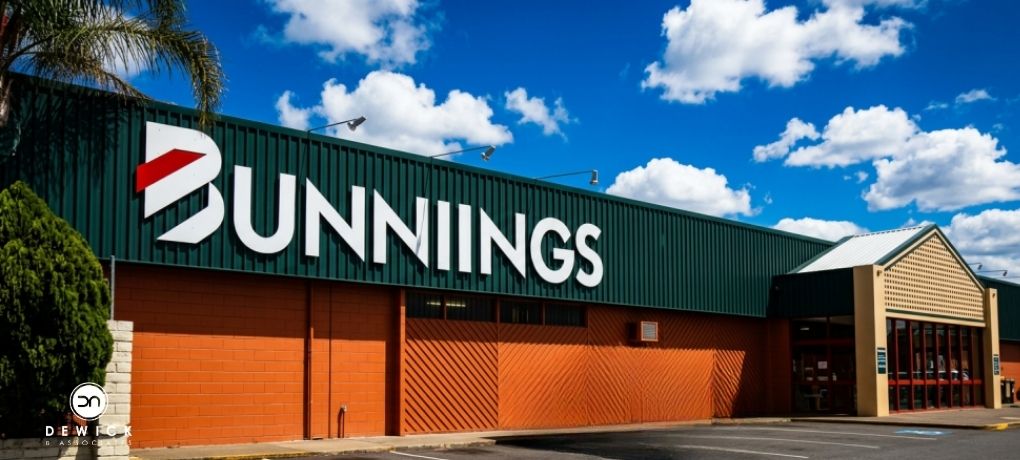
The Bunnings Woolston development is a large-format retail and warehouse facility located in Woolston, Christchurch, New Zealand. The project comprises approximately 12,000m² of retail and warehouse space, supported by around 400m² of commercial office accommodation distributed across ground and mezzanine levels.
To support regulatory compliance, Dewick & Associates was engaged by Beattie Air to undertake thermal performance modelling and prepare a formal H1 Energy Efficiency Compliance Report, in accordance with H1/VM2 Energy Efficiency Verification Method.
By Alexandra Vuksa
Lead Client Coordinator
June 2026
Credit: This file is licensed under the Creative Commons Attribution-Share Alike 3.0 Unported license. Subject to disclaimers. View the file here.
Christchurch, NZ
Region
Beattie Air
Client
2025
Completion Date
Not Available
Project Value
Client Background
Beattie Air is a specialist HVAC contractor delivering mechanical services design, installation, and commissioning solutions across commercial and industrial building projects throughout New Zealand. The company is regularly engaged on large-scale retail and industrial developments requiring coordinated mechanical performance outcomes and compliance with energy efficiency requirements.
For the Bunnings Woolston project, Beattie Air was responsible for delivering mechanical system solutions aligned with the project’s performance and compliance obligations. As part of the broader building consent and regulatory approval process, verification of the building’s thermal performance was required under the H1 Energy Efficiency requirements.
Dewick & Associates was engaged to provide independent computational modelling and compliance verification, ensuring the proposed building envelope and design configuration met the requirements of the H1/VM2 methodology.
The Challenge
The New Zealand Building Code clause H1 sets out minimum requirements for energy efficiency, with compliance demonstrated through either prescriptive or modelling-based verification pathways. For large-format commercial buildings such as warehouse retail facilities, the complexity of envelope geometry, glazing distribution, and mixed-use occupancy introduces significant variability in thermal performance outcomes.
For Bunnings Woolston, compliance needed to be demonstrated under the H1 Energy Efficiency Verification Method H1/VM2, requiring detailed thermal modelling against a defined reference building.
Key challenges included:
Application of the updated six-climate-zone framework, with the site located in Climate Zone 5 (Christchurch)
Accurate definition of the building activity type using the nearest applicable reference classification under D.5 Reference Building methodology
Assessment of a large-scale warehouse environment with integrated office components
Ensuring full alignment with H1/VM2 First Edition Amendment 1 (effective 4 August 2022)
Establishing a compliant and defensible modelling methodology suitable for consent submission
The primary requirement was to demonstrate that the proposed building fabric performance met or exceeded the reference building benchmarks defined under the verification method.
How We Solved It
Dewick & Associates undertook detailed computational thermal performance modelling in accordance with H1/VM2 Energy Efficiency Verification Method requirements.
The analysis involved the development of both the proposed building model and the corresponding reference building model, ensuring strict alignment with the methodology outlined in the compliance framework.
Key aspects of the approach included:
Application of Climate Zone 5 parameters specific to Christchurch
Definition of building geometry, usage profiles, and thermal zoning
Assignment of envelope construction properties including insulation, glazing, and infiltration assumptions
Alignment of building classification to the nearest applicable activity type under H1/VM2 guidance
Comparative modelling between proposed and reference building energy performance outcomes
Verification of compliance against the total building energy performance threshold
The modelling process was undertaken using established simulation methodologies to ensure repeatability, transparency, and compliance defensibility for building consent submission.
The Result
The completed H1 Energy Efficiency Compliance Report confirmed that the Bunnings Woolston development achieved compliance with the requirements of H1/VM2 Energy Efficiency Verification Method.
The analysis demonstrated that the proposed building envelope and thermal performance strategy aligned with the regulatory benchmarks established for Climate Zone 5, ensuring compliance with the New Zealand Building Code clause H1.
For the project stakeholders, the report provided:
A clear and defensible compliance pathway for building consent approval
Verified thermal performance modelling aligned with current H1 requirements
Confidence that envelope design decisions supported energy efficiency objectives
A structured evidence base suitable for regulatory submission and audit
By completing the verification process, the project team was able to progress the development with certainty that energy efficiency compliance requirements had been satisfied in accordance with the latest H1 framework.
Sources & References
The content in this case study has been informed by project documentation and client communication provided to Dewick & Associates during and following the completion of the project. Where external sources have contributed to our understanding of relevant standards or industry practice, these are listed below.
External Resources
NZBC Clause H1 Energy Efficiency Ministry of Business, Innovation and Employment (MBIE). Building Code clause H1 framework setting out minimum energy efficiency requirements for buildings, including thermal performance expectations for building envelope and services.
H1 Energy Efficiency Verification Method H1/VM2 Ministry of Business, Innovation and Employment (MBIE). Verification Method for demonstrating compliance with H1 energy efficiency requirements through whole-building thermal modelling and comparative reference building assessment.
Beattie Air Project Engagement Overview Beattie Air. Project delivery overview and mechanical services contractor engaged in HVAC system design and implementation across commercial and industrial developments in New Zealand.
Bunnings Warehouse Woolston Project Information Bunnings Warehouse New Zealand. Large-format retail development located in Woolston, Christchurch, incorporating warehouse and office accommodation with high-performance building services systems.
Note: Some content in this case study draws on a combination of sources rather than direct quotation. Where this is the case, contributing sources are acknowledged above rather than cited inline.
H1 Energy Efficiency Report
Independent assessment of the proposed building design against the energy efficiency requirements of Clause H1 of the New Zealand Building Code, including review of building insulation, glazing performance, thermal envelope construction, shading provisions and building services efficiency to demonstrate compliance and support Building Consent approval.
Undertaken by Dewick & Associates’ in-house Chartered Engineering Team, providing practical compliance advice, design optimisation and consent-ready technical reporting.
DO YOU NEED CONSTRUCTION Documentation FOR YOUR NEXT PROJECT?
Outsource to our expert team so you can stay focused on delivering high-quality on-site construction